Internal systems built around the way your company works
One system for orders, planning, warehouse and task flow, instead of several off-the-shelf apps that do not fit the way your company works. People keep working the way they do now, and the system takes over retyping data and chasing other departments.
One system instead of many licenses
A fixed subscription, no per-user fees
Integrations with ERP, CRM and accounting
AI that reads documents and assigns tasks
Your company is growing, and your processes still run on Excel and e-mail
Too many e-mails, too little time
Orders and requests arrive by e-mail, someone retypes them into a spreadsheet, and important messages get lost in the inbox. Once volume grows, mistakes start.
Constant questions and searching for information
The salesperson does not know what is in stock and calls the warehouse. The warehouse does not know what was sold and calls the salesperson. Meanwhile the client waits.
Several systems, and none of them talk to each other
You pay for several subscriptions and licenses, and data still has to be moved between them by hand.
Reports take longer than decisions
The management report takes two days to put together from several spreadsheets, and nobody is sure which numbers are current.
Your company bends to off-the-shelf apps
Systems on the market do 60% of what you need, and you pay for the other 40% with people’s manual work.
Each of these problems means several hours a day of work that brings in no money. We hand that work to a system, and your people get back to clients and production.
How much does manual work cost your company?
The numbers are examples for a company with a few dozen employees. Untick what does not apply to you and set the hours your whole team spends on it each month.
- 120 h / month
- 80 h / month
- 60 h / month
- 45 h / month
- 30 h / month
Manual work in the selected processes
335 hours a month
that is 2 full-time jobs
Cost per year
PLN 241,200
PLN 20,100 a month
What the app changes
- An order goes into the system straight from a form or an e-mail, and data moves between systems on its own.
- The system downloads the bank statement and matches payments to invoices itself. Accounting only checks the items it could not match.
- The status of every order is visible in one place, and nobody has to ask colleagues.
- Reports are calculated automatically from current data and are ready when you need them.
- Reminders go out automatically before and after the due date, and the list of overdue payments updates itself.
A rough estimate. In the assessment we calculate it with your company data.
Less retyping, more time for clients
The system does what people do today
Orders enter themselves, payments match to invoices, and reminders and summaries go out with no one working on them. The company grows without hiring more people for routine work.
AI built into your processes
Artificial intelligence reads invoices and documents, assigns requests to the right people and prepares replies. Staff approve the result and get only the cases AI does not recognize.
All data in one place
Stock, statuses, history and settlements are in one system, and nobody asks which version of the spreadsheet is current.
Reports without manual calculations
The summary someone spends two days on today is ready the moment you need it.
The company keeps going when someone is on holiday
The process and the history of every case are recorded in the system. A holiday or an employee leaving does not stop the work.
The system grows with your company
A new process, integration or branch means more features added under the subscription. The system does not need replacing after a few years.
Let’s see which work in your company a system can take over. Book a free assessment.
Book a free assessment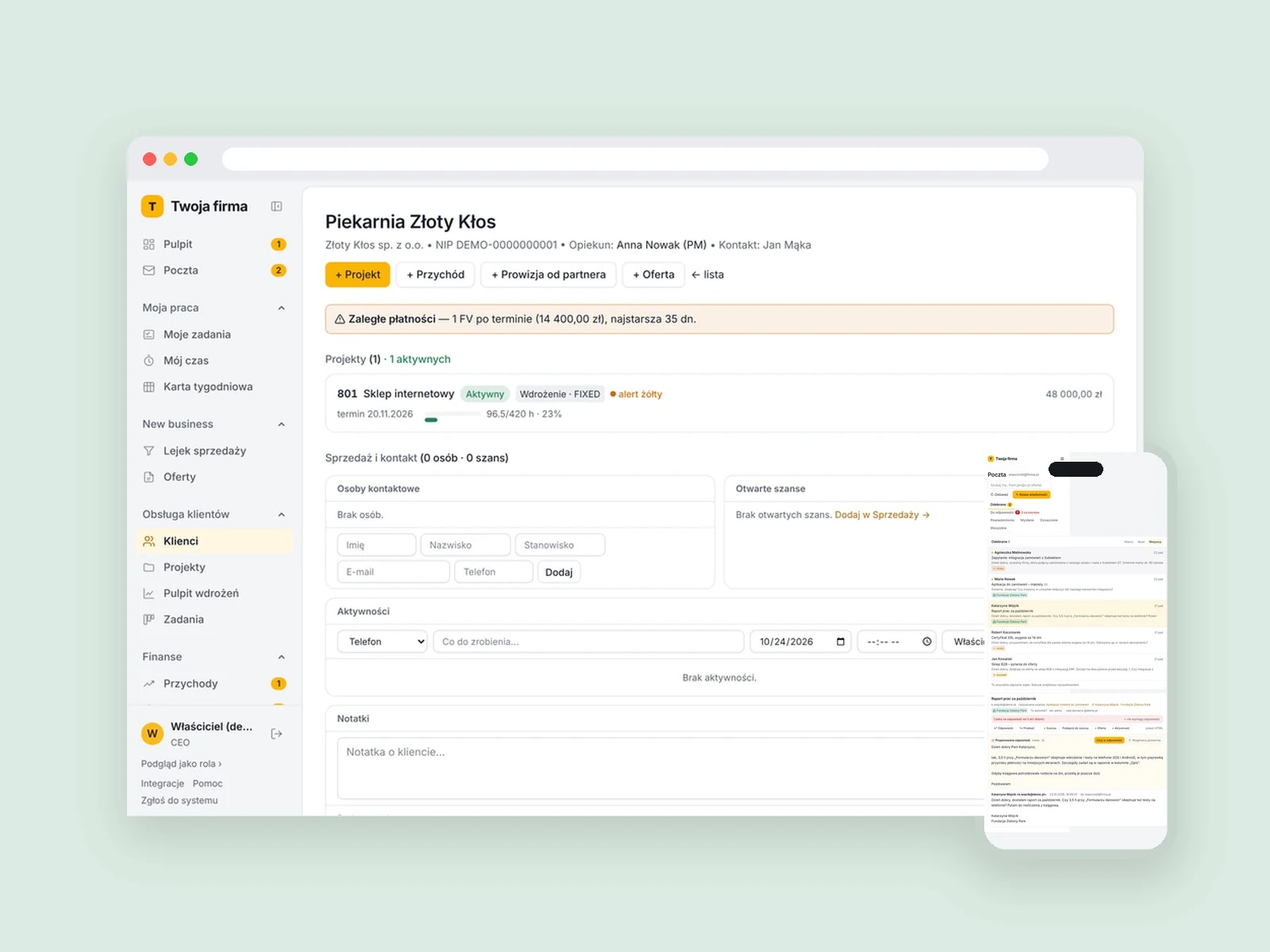
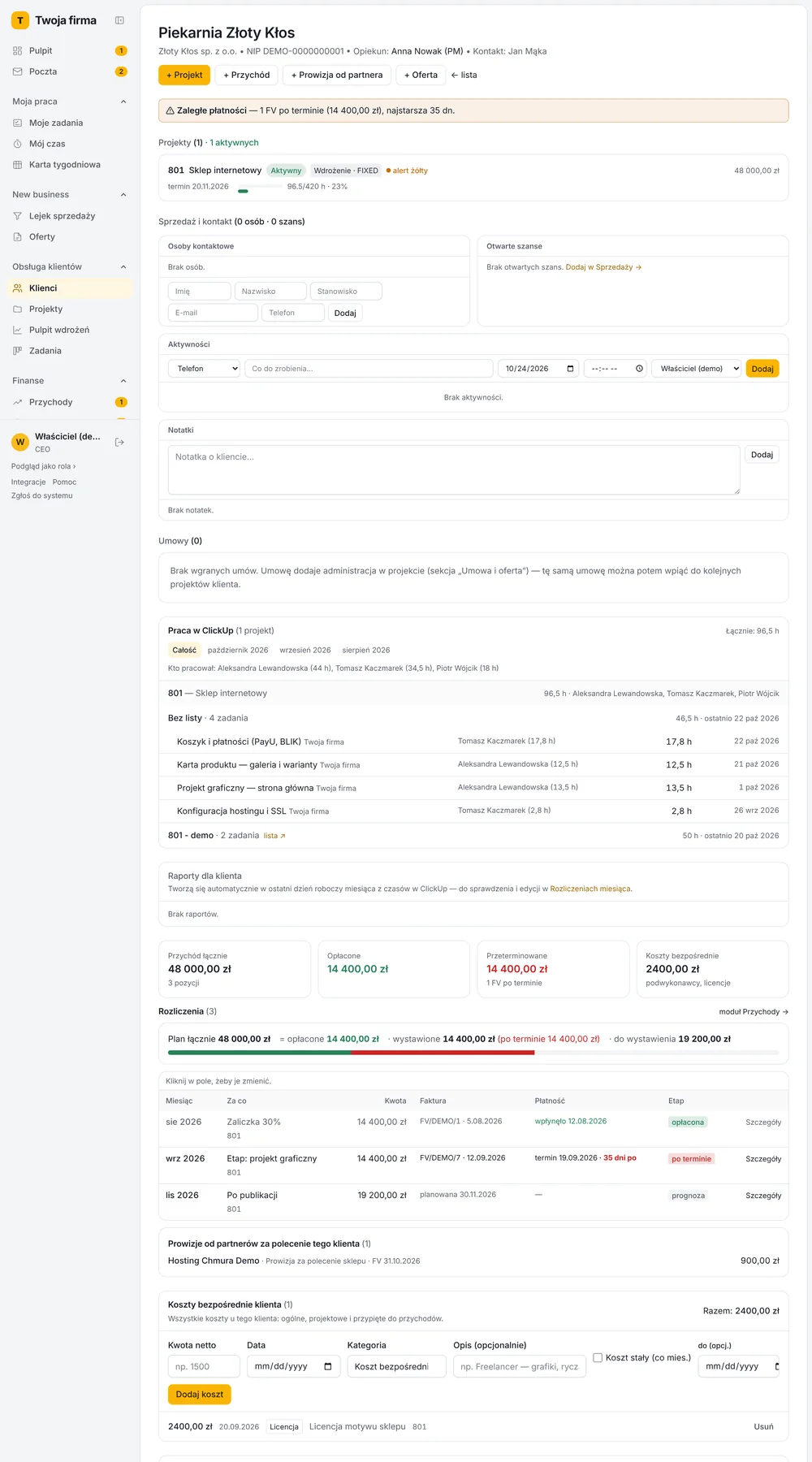


Excel, an off-the-shelf app or your own system?
Fit with your process
- Excel and e-mail
- Everyone keeps the spreadsheet their own way
- Off-the-shelf app
- The company adapts to the app
- System from Tamago
- The system follows your process
Cost as the team grows
- Excel and e-mail
- More hours of manual work
- Off-the-shelf app
- You pay for every user
- System from Tamago
- A fixed subscription, no per-user fees
Integrations with other systems
- Excel and e-mail
- Data retyped by hand
- Off-the-shelf app
- Only those the vendor planned for
- System from Tamago
- The ones your company needs
Reports
- Excel and e-mail
- Put together by hand from several files
- Off-the-shelf app
- Ready-made templates
- System from Tamago
- Your metrics, always up to date
Data
- Excel and e-mail
- Files scattered across drives
- Off-the-shelf app
- Data held by the app vendor
- System from Tamago
- The data belongs to your company
Time to start
- Excel and e-mail
- Right away
- Off-the-shelf app
- A few days
- System from Tamago
- 7 to 10 weeks
If an off-the-shelf app does what you need, we will tell you in the assessment and will not push you toward your own system.
We most often combine two or three of these elements
Admin panel and process flow
Problem
Orders, complaints, applications or production are tracked in a spreadsheet edited by five people, and nobody knows what is current.
Result
Statuses, owners, deadlines and change history are in one system. Everyone sees their own tasks, and management sees the whole picture.
Production and resource planning
Problem
The planner schedules production by hand, and a change to one order means rebuilding the whole plan.
Result
The plan is calculated automatically from orders, capacity and availability, and screens at workstations show what to do now.
Reporting and management dashboards
Problem
The management report takes two days to put together from several spreadsheets, and the numbers do not match.
Result
You see margin, workload, overdue payments and sales per client as they happen, also on your phone.
Integrations with ERP, CRM and external systems
Problem
Data is retyped by hand between systems, which means errors, delays and double work.
Result
Orders, invoices, stock and clients move between systems automatically. We have built integrations with Comarch, WAPRO, Subiekt, Otomoto and payment gateways.
Automations and AI assistants in the system
Problem
Repetitive tasks (reading documents, sorting requests, answering common questions) take up people’s time.
Result
Documents are read in automatically, and requests go to the right person. Your team gets back the hours that now go into retyping and passing cases on.
Should your clients or partners use the system too? For that we build online shops, B2B ordering platforms and client portals.
B2B and B2C sales platformsHow we work together
Free assessment
We talk about how your team works today and find where manual work takes the most hours. After the assessment you get a preliminary quote.
Scope and contract
We write down in documentation what will be built, in what order and by when. We plan the implementation stages from that.
Mockups for approval
Before any code is written, you click through the system’s screens in your browser and send your comments. Developers start once you approve the design.
Staged implementation
We build the system in stages. You check progress on a test server and accept the whole system before launch.
Support after launch
The subscription covers hosting, security, updates and team hours for development. The system is looked after by the same people who built it.
After launch, you are not left alone with the system
5 developer hours every month
A new report, an extra field, a new user role or a fix in an integration. We make small changes without separate quotes and orders.
Server, hosting, domain and SSL
You do not have to look for hosting or keep track of certificates. The app runs on our infrastructure.
Test server
You check every change on a copy of the app before users see it.
Agreed response time
You report an outage with one e-mail and know in advance how quickly the team will deal with it.
Backups, monitoring and reports
A daily off-server backup and round-the-clock monitoring. Once a month you get a report on the work done and how the system is running.
Starts only after launch
During the build you pay only for the implementation. The subscription starts after the app is accepted.
How we price the work
You get a preliminary quote in the assessment. We calculate the final price after writing up the scope, from the number of screens, integrations and user roles. That amount does not change during the build.
Get a quote- 01
Implementation
Building the system within the scope written up after the assessment.
Fixed price
- 02
Subscription after launch
Hosting, security and team hours for changes and development.
Monthly subscription
This offer is not for companies that are happy with an off-the-shelf app as it is.
Progress preview
You click through finished screens on the test server during the build, without waiting for the end.
Acceptance of the whole system
You check the complete system on the test server. You collect comments for 10 working days and send them in one list.
New ideas along the way
We add them after launch, within the subscription hours or as another stage.
Quote based on the work involved
Every part of the scope has the team hours it needs. You see where the amount comes from.
What clients ask us
before they decide
The questions we hear most often in the first conversation.
No. The amount agreed after the scope write-up holds until the system is accepted. If an idea for a new feature comes up along the way, we quote it separately.
On the work involved. After the assessment and the scope write-up we calculate the team hours needed for each screen, integration and user role. After launch there is a monthly subscription, under which we maintain and develop the app.
Small and medium changes: new fields, reports, statuses, fixes in integrations, new roles. We quote larger features separately or spread them over several months of the subscription.
We are. A Tamago developer writes and understands the code, and every change goes through tests on the test server and your acceptance before users see it. You get a warranty on the system.
You do. The system is yours: the intellectual property rights (economic copyright) pass to your company, and so does all the data you collect in it. You can develop it with any team.
Yes, if the system has an API or a data export. We have built integrations with Comarch, WAPRO, Subiekt, Otomoto and payment gateways many times. We agree the scope of integrations at the documentation stage.
Native mobile apps and systems that require medical or banking certification. If your project is not a fit for us, we will tell you in the first conversation and suggest where to look.
Usually 7 to 10 weeks from the start of work to launch. Larger systems with several integrations take longer, and you get the exact schedule together with the quote.
Find out how many hours a week your team loses to retyping data
Book a free assessment. We will go through your process, point out the work a system can take over and show you where to start.